Type: Client Project | Completed while serving as Senior Visual Designer at P3 Agency
Role: Visual identity, website design from scratch, content architecture, responsive design system
Disciplines: Brand identity · Website design · Information architecture · Responsive design systems · Content design

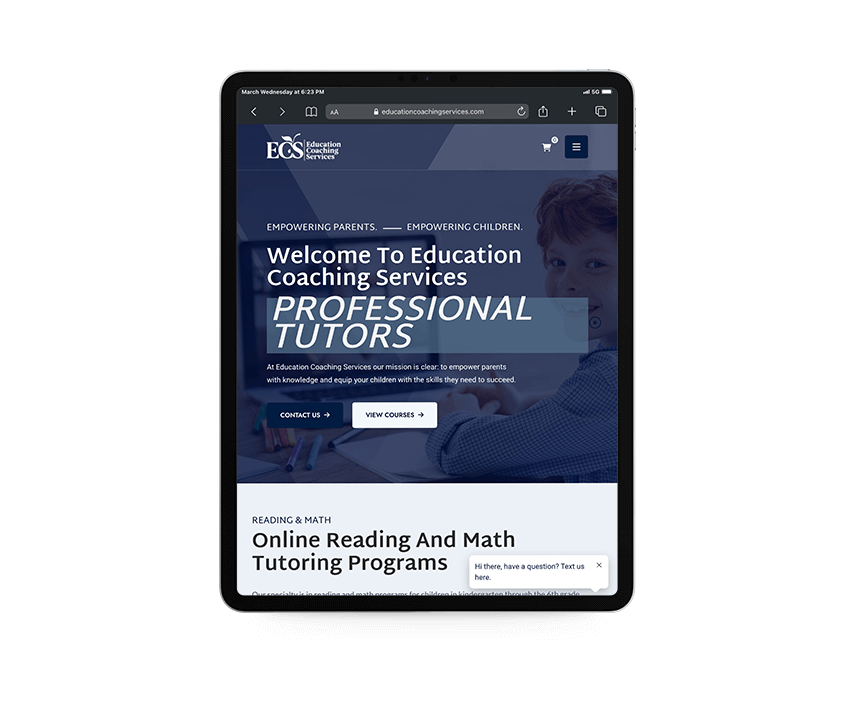


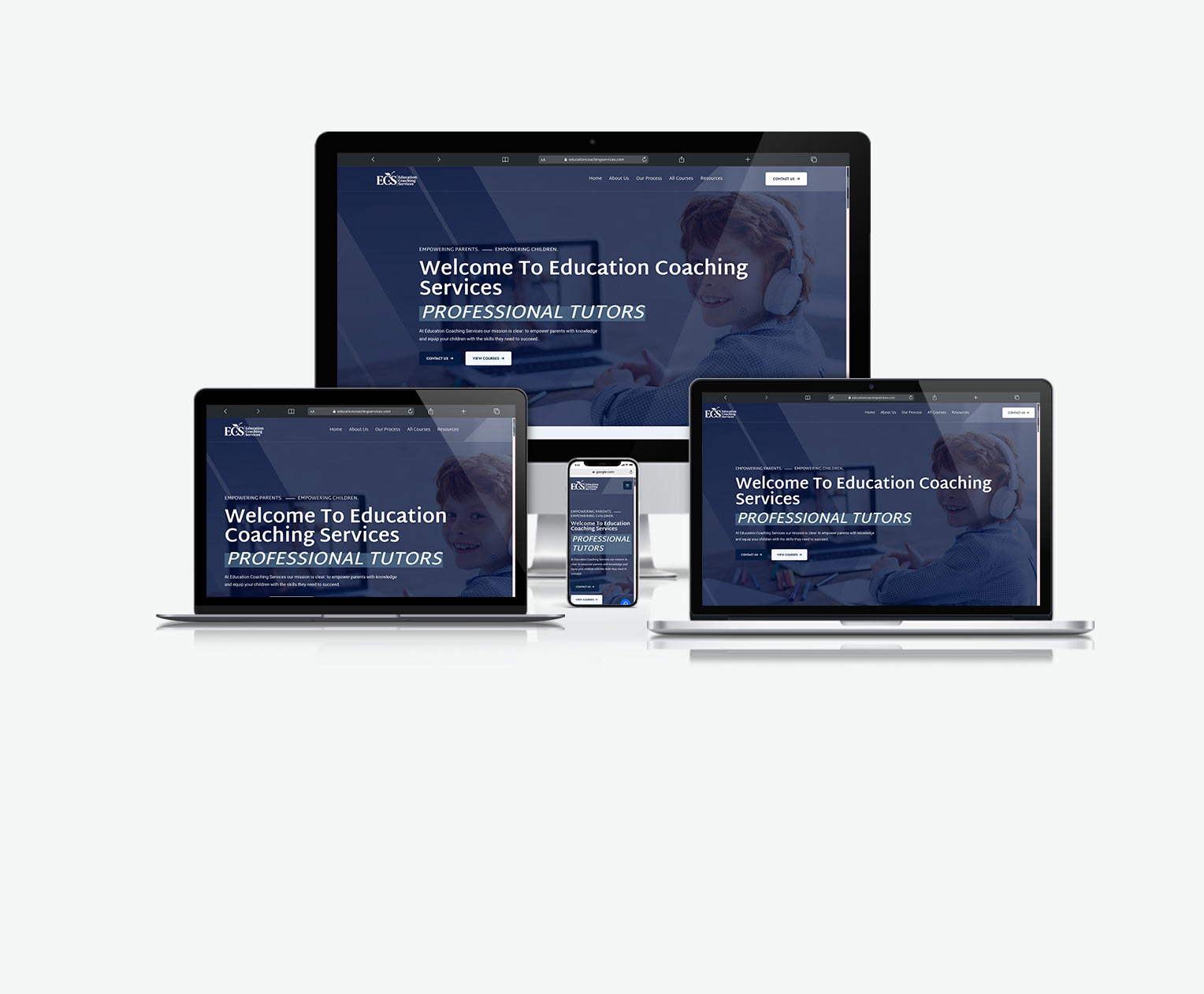
Education Coaching Services is a tutoring and coaching company with a clear mission: to give parents and students the support and clarity they need to navigate the education system. When I came to the project, the company had no website at all no digital presence, no visual identity to speak of, and no system for communicating their programs to the families who needed to find them.
Building from zero is a different kind of design challenge than a redesign. There's no existing system to audit or correct; there's only the work of understanding who the client is, what they believe, who their audience is, and what those people need to feel and understand before they'll trust a company with something as high-stakes as their child's education. That understanding has to come first. The design comes second.
Education Coaching Services serves parents, usually parents who are worried. They're looking for help because something isn't working, and they're entrusting a company with their child's academic trajectory. The brand needed to communicate two things simultaneously: competence (we know what we're doing, we have programs that work) and warmth (we understand your situation, we're on your family's side).
Getting that balance wrong in either direction is a brand problem. Too clinical, and the brand feels intimidating rather than welcoming. Too casual and it fails to establish the credibility parents need to trust it. The site's visual language and tone were calibrated throughout against that dual requirement.
The visual system was built around energy, accessibility, and confidence — an education brand that communicates momentum rather than anxiety. The color palette is warm and vibrant, departing from the muted blues and whites that dominate education-sector design and instead signaling approachability and engagement. Bold accent colors paired with a clean, highly legible body system kept the brand feeling professional even while the palette leaned expressive.
Typography followed the same logic: a strong, modern display treatment for headlines (program names, value statements, section headers) and a highly readable sans-serif for the body copy, testimonials, and program descriptions that parents would actually read in full. Type scale was set deliberately so that the most important information, what the programs do, what they cost, and how to connect, was the most immediately legible content on any given page.
Photography and illustration choices prioritized authenticity and diversity, featuring real students and real learning contexts rather than aspirational stock imagery. For a brand built on human connection and trust, imagery that feels real carries more weight than imagery that looks polished.
Organizing for Decision-Making
Parents arriving at an education coaching site are usually trying to answer a few very specific questions: What exactly do you offer? Is this right for my child? What does it cost? How do I get started? The site architecture was built to answer those questions in that order, reducing friction between arrival and decision rather than burying the answers behind a narrative the visitor didn't ask for.
The top-level navigation surfaced the program offerings immediately, with each major program type (tutoring, coaching, specialized support) given its own landing page with consistent structure: what the program is, who it's for, what it includes, and what to do next. Testimonials were integrated into the context of each program page. A parent describing their experience with the tutoring program belongs on the tutoring page, not on a separate Reviews page that many visitors never reach.
The sign-up and contact flows were designed to be as low-friction as possible. For families who had already decided and just needed to take an action, the path from "I want this" to "I've submitted a form" was direct. For families still researching, a resource hub section provided educational content that demonstrated the company's expertise without requiring an immediate commitment.
Mobile design was built in from the start, with the understanding that many parents, particularly working parents with busy schedules, primarily encounter the site on their phones, often while managing several other things simultaneously. Every page was designed and tested for mobile first.
The forms, CTAs, and contact components were designed as part of the brand system, not as bolted-on functional elements. For an education services company, the moment when a parent decides to reach out is a vulnerable one; they're asking for help, and the design of that moment needs to feel welcoming and low-stakes rather than transactional.
CTAs were written and designed to invite rather than demand: "Let's connect," "Find the right program," "Start the conversation." Button styles, form layouts, and confirmation messaging were all treated as brand touchpoints with the same care as the hero or service pages.
Education Coaching Services is the project where I most clearly saw brand identity and information architecture as the same problem. Building from zero meant every decision about what the brand sounds like, what it looks like, how it organizes its content, what it asks people to do, and in what order was a design decision, not an inherited constraint. That's both the most demanding version of the work and the version where systems thinking matters most, because there's nothing to fall back on if the system isn't sound.
The result is a brand that communicates what the company actually is: expert, committed, and human, and a website that gives parents what they need to make a confident decision about working with them.